
GTA 4 Cheat Codes: Why You Still Need to Know Them
GTA 4 Cheat Codes and What They Teach Beginner Devs
Honestly, who hasn’t spent hours messing around with GTA 4 cheat codes? I mean, come on. We’ve all been there – sitting on the couch, frantically punching in sequences for a sweet Buzzard helicopter or just to watch the cars fly off the road. It felt like pure chaos, didn’t it? Like you had this secret little god-mode that the game intended for you to find.
But for us, the folks at ObserverGames, and especially for you, aspiring game developers and artists out there, these old-school cheats are more than just a nostalgic button-mashing session. They’re actually a fantastic, low-key peek behind the curtain of game design. You know what? They show us something really fundamental about how games are built and, more importantly, tested.
Think about it this way: when you, a player, pop in a cheat, you’re essentially bypassing a bunch of rules, right? You’re giving yourself infinite health or spawning a super-fast car. That, my friends, is exactly what a QA (Quality Assurance) tester or a developer needs to do quickly. They don’t want to spend 20 minutes grinding for cash just to check if a new weapon animation works. They need a quick shortcut – a backdoor. It’s not just for fun; it’s a workflow hack.
Wait, What’s a QA Tester and Why Do They Need GTA 4 Cheat Codes?
“QA Tester” sounds super professional, but honestly, it’s just the person who tries to break your game. They are the heroes who find the bugs, the exploits, and the moments that make a player scream at their screen. A cheat code, often called a “dev command” or “debug tool” internally, is their best friend.
Imagine you’re developing a new weather system. You need to see if the rain effects look good in a specific part of Algonquin. Do you wait for the in-game weather cycle to finally hit ‘rain’? Nope! You hit the Weather Cheat (in the dev build, of course), and bam – instant thunderstorm. That’s efficiency. The cheat system in GTA 4 is, in its essence, a very simplified, player-facing version of the actual developer console that runs beneath the surface of most games. It’s a testament to the developers who knew their product needed these little levers for both testing and, yes, for a bit of player fun. It’s almost like a little nod, saying, “We know you wanna mess with this, so go ahead!”
A Quick Look at the Dev-Player Relationship: When you build a game, you’re constantly fighting this internal battle: how much control do you give the player? Cheats are a way to give them total control, but in a totally contained, mostly harmless way. It’s a genius stroke of game design – a little pressure valve for the player who just wants pure, unadulterated mayhem.
The “Money Cheat” and the Art of Balancing Progression
Let’s talk about the infamous “money cheat” – or the lack thereof, in GTA 4‘s case. Did you ever notice that? In the older GTA games, the cash cheat was king. But in GTA 4, you had to earn your dough. That wasn’t an accident.
Here’s why it matters: GTA 4 was a different beast. It was gritty, grounded, and focused heavily on Niko Bellic’s personal story. The thing is, money was directly tied to the narrative and your progression. You needed to feel the weight of those bills and the struggle of making ends meet to buy a safehouse or a new outfit. If the developers had thrown in a cheat for instant millions, it would’ve completely gutted the core emotional feeling of the game.
This is a huge takeaway for you as a beginner developer: Every mechanic, every feature, every cheat even, has to be in service of the game’s core experience. If adding a feature (like a money cheat) breaks the intended feeling (gritty struggle), you just shouldn’t do it. It forces you to think about game pacing – that invisible rhythm that dictates how fast or slow the player moves through your world. It’s a delicate dance, really.
| Cheat Type | What It Affects in the Game | Lesson for Developers |
| Health/Armor | Player survival, combat difficulty | Essential for quick combat QA/debugging. Teaches how to temporarily ignore the damage system. |
| Weapon Spawns | Inventory and combat readiness | Helps test weapon balance and effects instantly. Shows how item economy is bypassed. |
| Vehicle Spawns | World traversal, mission access | Vital for testing map layout and physics quickly. Highlights the importance of the vehicle asset pipeline. |
| Weather/Time | Environmental ambiance, lighting | Allows artists and designers to quickly check different aesthetic conditions without waiting. |
How to Get All the Cool Toys: A Few Essential GTA 4 Cheat Codes
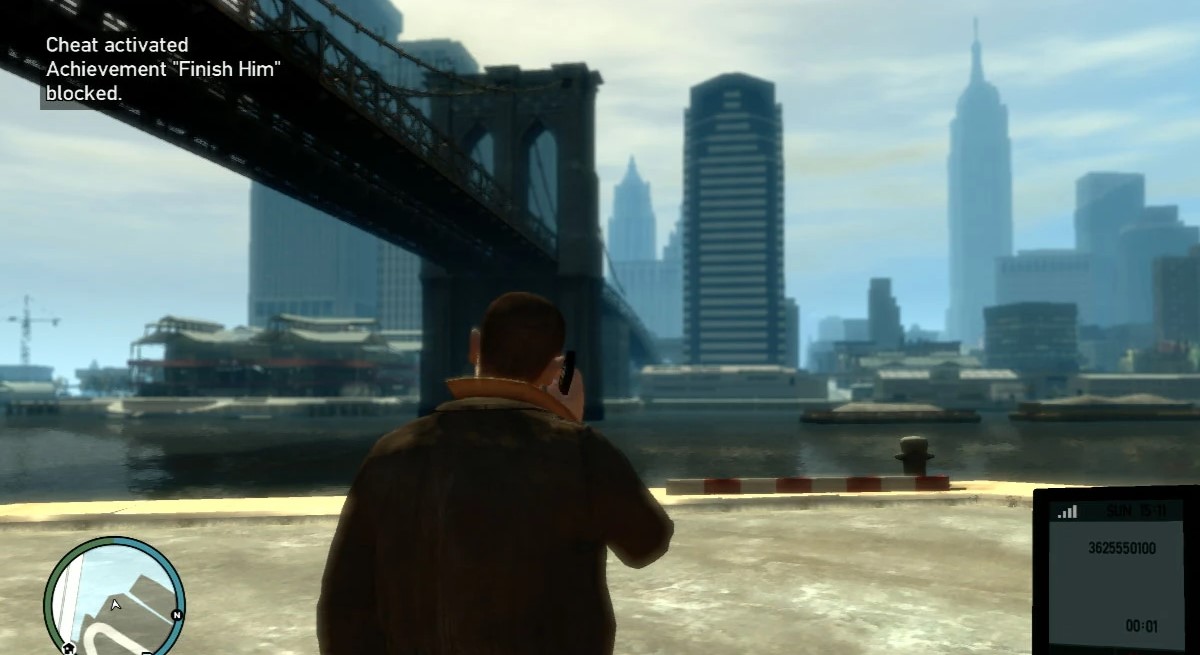
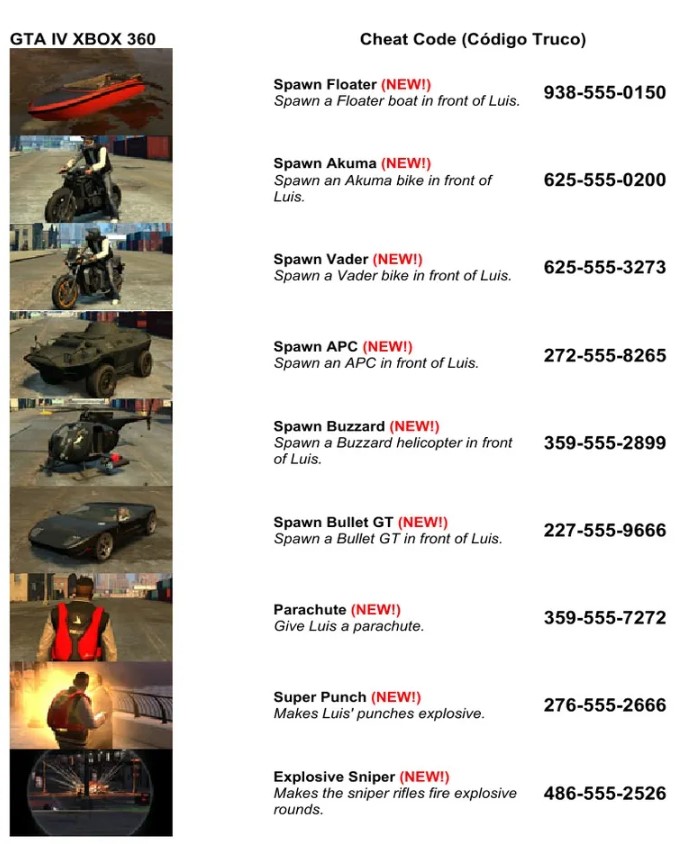
Okay, okay, all this high-minded design talk is great, but sometimes you just want the satisfaction of the fireworks display. So, for old times’ sake, let’s look at a few of the must-have GTA 4 cheat codes. Remember, in GTA 4, you actually have to dial these in on Niko’s phone. That’s a genius bit of in-world immersion, isn’t it? It grounds the magic in the reality of the game world. Honestly, it makes it feel less like a “cheat” and more like a “special number.”
- Spawn the Hunter (An Assault Helicopter): Dial 359-555-0100. This one is a classic. It completely breaks the game’s grounded realism, but man, does it feel good to soar above Liberty City. It’s your own personal sandbox tool.
- The Super-Speedy Run: Dial 468-555-0100. This little cheat doesn’t affect the story, but it changes how you experience the city on foot. It’s great for testing if your pedestrian AI can keep up with a superhuman Niko. A funny side effect, for sure!
- Change the Weather: Dial 468-555-0100. This is the dev command that got left in for the players. Sun, rain, snow – you control the elements. As an artist, being able to instantly see your textures under a downpour versus bright sun is super valuable.
The Power of Secret Menus in GTA 4
It’s tempting to think of these codes as just a random sequence, but they’re often tied to an internal function call. If you were looking at the code, you might see something like CALL FUNCTION: SpawnVehicle("HUNTER"). The phone number is just the player’s interface for that command.
You know, that’s a great way to think about player-facing systems. They’re usually just a pretty front-end for a much simpler, more functional thing happening behind the scenes. This entire cheat system is a living example of the front-end/back-end split in programming.
- The Back-End is the code that actually makes the helicopter appear.
- The Front-End is the phone interface where Niko dials the number.
If you can separate your game’s mechanics like that, your code will be so much cleaner. Trust me, your programmer friends will thank you later. It might seem like a small detail, but these are the tiny design decisions that make a game truly robust.
Making It Personal: Why Cheats Feel So Good
Let’s get a little philosophical here for a second. Why do we, as players, crave these little moments of anarchy? Why do we love the GTA 4 cheat codes so much?
I think it boils down to agency – that feeling of being in complete control. In real life, we don’t always get to choose the perfect car, have infinite money, or escape every sticky situation. But in a game, for a few glorious moments, the rules are optional. And that’s a deeply satisfying feeling. It’s a form of escapism that goes one step beyond the standard game loop.
And that’s the core emotional cue you should aim for when developing your own game: make the player feel powerful. Whether it’s through a satisfying combat system, a tricky puzzle they solve, or even a hidden debug code you leave in as a fun easter egg – that sense of power is what keeps them coming back. It’s a powerful connection, seeing the developers acknowledge that sometimes, you just want to mess around.
| Game Element | Developer’s Intent | Player’s Experience with Cheats |
| Police System | Create tension, enforce rules | Total freedom, ultimate power fantasy |
| Resource Economy | Drive progression, create struggle | Instant gratification, zero consequence |
| Mission Structure | Guide narrative, provide challenge | Sandbox play, non-linear exploration |
See how cheats essentially flip the script? The developers want you to follow the rules, but they let you break them sometimes. It’s a subtle but brilliant contract between the creator and the player.
FAQ
Should I really include cheats in my finished game?
That’s a big “it depends.” For a public-facing game, generally no – they can ruin the intended progression. But, you should absolutely include dev commands or a debug menu in your internal builds for testing! Some developers leave subtle Easter egg cheats in for fun, but be careful they don’t break the main game experience.
What’s the difference between a cheat code and an exploit?
A cheat code is an intentional feature left in by the developers (like the ones in GTA 4). An exploit is an unintended bug or flaw in the code that players discover and take advantage of to gain an unfair edge. You put in a cheat; you find an exploit.
How do I stop players from finding my dev console?
The safest way? Don’t compile it into the final version of the game. Use conditional compilation flags #IF_DEBUG to ensure that all your internal tools and the code for your shortcuts are completely excluded from the master build you send out.
Is it wrong to look up other games’ codes or dev tools?
Not at all! Looking at how games like GTA 4 handle their internal systems – even the exposed cheats – is a great learning experience. It’s like studying a great painter’s technique; you’re just learning about the craft.
Will cheats slow down my game development process?
Quite the opposite! Having robust, easy-to-use debug cheats will speed up your testing dramatically. You won’t waste time playing the first three levels just to check a change on level four.
What should I name my internal cheat commands?
Be clear and memorable. GTA 4 used phone numbers, but internally, something like godmode_on() or spawn_car("FIRETRUCK") is a lot clearer for your team. Honestly, sometimes the funnier the name, the better.
Where does the idea of “cheat codes” even come from?
The whole concept started way back in the early days of gaming. Developers often needed an easy way to skip levels or get extra lives while testing – they were basically just developer tools. The most famous one, the Konami Code ($Up, Up, Down, Down, Left, Right, Left, Right, B, A, Start$), was created by a programmer so he could easily demo his game without dying every time. It was a secret little helper that just kind of stuck.
Wrapping Up: What We Learned from a Phone Dial
So there you have it. The secret life of GTA 4 cheat codes isn’t just about spawning a Rhino tank or getting a ridiculous vehicle. For us, the ones building the worlds, it’s about efficiency, understanding player psychology, and maintaining game balance. It’s a masterclass in separating the ‘fun’ part of the code from the ‘system’ part of the code.
As you start your journey as a developer or artist, remember these lessons. Think about the hidden doors you build into your game – not just for the player, but for your own testing process. Make your life easier!
We here at the ObserverGames team are always trying to find these subtle design lessons in the games we grew up with. It truly shows that even the smallest, most chaotic feature has a thoughtful design reason behind it.