
Smite Tier List: The Latest Meta Breakdown
Smite Tier List Shakeups That Actually Matter
So, another patch dropped. And yeah, the meta’s moved around again. If you’ve been grinding ranked lately, you’ve probably noticed some gods feel… different. Stronger. Weaker. Sometimes just plain weird. That’s what happens when Hi-Rez tweaks numbers and reworks abilities – suddenly your main gets buffed into the stratosphere or nerfed so hard they’re barely playable. But here’s the thing about any Smite tier list – they are not gospel.
A god sitting in B-tier can absolutely wreck an S-tier pick if the player knows what they’re doing. Still, understanding where gods land after patches helps you make smarter picks. And honestly? It saves you from that sinking feeling when you instalock someone who just got hit with the nerf hammer.
Why Does a Smite Tier List Keep Changing (And Why That’s Fine)?
Every patch brings adjustments. Sometimes it’s small number tweaks – a bit more base damage here, slightly faster cooldowns there. Other times Hi-Rez goes nuclear and completely reworks a god’s kit.
The recent patches have been particularly spicy. We’ve seen warriors get beefier, some mages lose their early game pressure, and assassins… well, they’re still doing assassin things, but now with more style points.
What makes Smite’s tier lists trickier than other MOBAs is the game mode factor. A god who dominates Conquest might be garbage in Joust. Arena tier lists look completely different from ranked Conquest. So when people argue about placements, they’re often talking past each other because they’re thinking about different modes.
The Current S-Tier Situation
Right now, S-tier isn’t as crowded as it was a few months back. Hi-Rez has been doing this weird balancing act where they boost underperformers without completely gutting the top picks. Sometimes it works. Sometimes… not so much.
Here’s who’s sitting pretty at the top:
- Set – Still incredibly slippery with crazy damage output. His kit just does too many things well.
- Morgan Le Fay – The recent adjustments barely touched her mid-game power spike. She’s still deleting squishies like it’s her job (because it is).
- Gilgamesh – Warriors are having a moment, and Gil exemplifies why. Tanky, disruptive, and he brings solid team utility.
- Baron Samedi – Healing, damage, crowd control. Pick two, right? Nope, Baron gets all three and a bag of chips.
You know what’s wild? A few patches ago, people were calling Set mid-tier. Now he’s back on top. That’s how fast things move.
The Smite Tier List by Role Breakdown
Let me be real with you – trying to rank every god in one massive list gets messy. Breaking it down by role makes way more sense.
Support Tier Status
| God | Tier | Why They’re Here |
|---|---|---|
| Atlas | S | Absurd peel, team buffs, basically unkillable |
| Yemoja | S | Infinite mana means infinite pressure |
| Khepri | A | The revive is still clutch, just not as oppressive |
| Sobek | A | Pluck remains one of the best abilities in the game |
| Kuzenbo | B | Fun but situational, needs the right comp |
Supports are in a weird spot. The best ones don’t just tank damage – they actively create opportunities. Atlas basically warps entire teamfights around his presence. Yemoja, when played well, feels like fighting two gods at once.
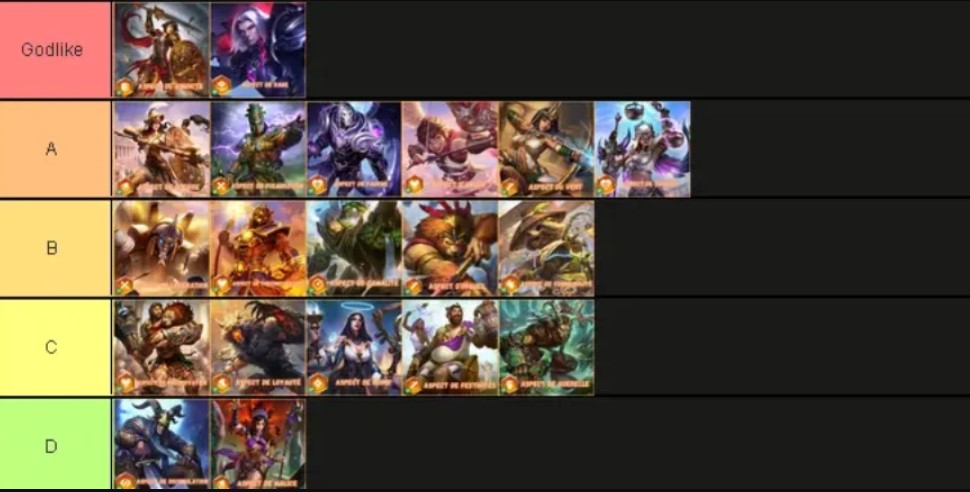
Smite Tier List – Mid Lane Madness
Mid got interesting after the last few patches. Mages with strong early clear still dominate, but we’re seeing more hybrid builds and off-meta picks sneaking in.
High-tier mids right now: Morgan Le Fay, Merlin, Tiamat, and, surprisingly, Janus made a comeback. His portals got some love in a recent update, and suddenly, he’s relevant again.
The thing about mid is it’s super matchup-dependent. You can be playing an A-tier god and get absolutely stomped by a B-tier counter. That’s why pro players value flexibility over tier rankings.
Jungle Tier Shifts
Assassins live and die by their early game pressure and late game threat. Right now, the jungle meta favors gods who can do both:
- Set (yeah, he’s here too)
- Arachne (low-tier in Conquest, S-tier in making you uninstall)
- Thanatos (early game bully, falls off but less than before)
- Fenrir (support Fenrir is dead, jungle Fenrir is thriving)
Jungle’s probably the most patch-sensitive role. One item change and suddenly everyone’s build path shifts. The recent adjustment to Bumba’s Hammer created some interesting ripple effects.
What Actually Changed in Any Smite Tier List After Recent Patches?
Okay, let’s talk specifics. Because “meta shifted” doesn’t tell you much without context.
Warrior Buffs Across the Board
Hi-Rez clearly decided warriors needed some love. Base health increases, better scaling on abilities, and some quality-of-life changes that make them feel less clunky. Gilgamesh, Achilles, and King Arthur all got meaningful buffs that pushed them up the tier list.
This matters because warriors in solo lane were struggling against certain guardians and mage matchups. Now they can actually hold their own without getting bullied out of lane.
Mage Itemization Shake-up
The mage item adjustments were subtle but impactful. Doom Orb got tweaked (again), and some penetration items saw number changes. This didn’t create any instant S-tier gods, but it did shift power curves.
Early game mages lost a bit of their oppressive laning phase. Late-game mages got slightly better scaling. It’s a nudge toward longer, more strategic matches rather than stomps decided by 10 minutes.
Hunter Changes Nobody Asked For
Hunters are… fine? They’re in this weird middle ground where they’re essential to team comps but rarely feel overpowered. Recent patches gave some basic attack speed adjustments and tweaked a few abilities.
Heimdallr climbed a bit. Anhur stayed consistent. Apollo’s still Apollo – safe, boring, effective.
Items That Changed Everything
Sometimes it’s not about god balance – it’s about items.
Silverbranch Bow got buffed, and suddenly, hunters with attack speed steroids became scary. The Evolved Book of Thoth saw adjustments that made it less of an autopick for every mage. Witchblade became relevant again for warriors and assassins who need anti-heal plus utility.
| Role | Core Items | Why They Matter |
|---|---|---|
| Support | Sentinel’s Gift → Compassion, Sovereignty | Early sustain and team auras |
| Mid | Conduit Gem → Gem of Focus, Divine Ruin | Power spike and anti-heal |
| Jungle | Bumba’s Dagger → Bumba’s Hammer, Hydra’s | Ability burst and objective secure |
| ADC | Death’s Toll → Death’s Embrace, Silverbranch | Sustain and DPS scaling |
| Solo | Warrior’s Axe → Sundering Axe, Mystical Mail | Lane pressure and teamfight presence |
Item builds matter almost as much as god selection. You can play an S-tier god with a trash build and get stomped by someone running optimal items on a B-tier pick.
Gods That Deserve More Respect
Have you ever noticed how some gods sit in mid-tier but consistently perform well? That’s because Smite tier lists can’t account for player skill and team synergy:
- Kukulkan gets written off as a noob-stomper, but a good Kuku player absolutely terrorizes backlines. His damage output is disgusting if he survives to the late game.
- Ah Muzen Cab has zero mobility and dies if someone looks at him wrong. But his boxing potential and objective burn are legitimately top-tier. He’s just hard to execute in ranked, where everyone’s diving you.
- Zhong Kui – tanky mage who never quite fits the meta but always shows up in pro play. Why? Because he doesn’t die easily and brings consistent damage.
These gods prove that tier lists are guidelines, not rules. Play what you’re good at, not what some tier list says is meta.
Where Is the Meta Probably Heading?
Prediction time. Based on recent patch patterns and community feedback, here’s where I think things are going:
- Hi-Rez seems committed to making more gods viable rather than creating a small pool of dominant picks. That means we’ll probably see continued small adjustments rather than massive reworks.
- Warriors will likely stay strong. They’re in a good spot right now, and nerfing them back down would just restart the frustrating cycle of guardians dominating the solo lane.
- Mages might see more variation in builds rather than ability changes. The item system allows for more flexibility than individual god tweaks.
Assassins… honestly, assassins are always volatile. One patch they’re must-bans, next patch they’re forgotten. Expect that trend to continue.
The Smite Tier List Reality Check
Here’s what nobody tells you about tier lists: they assume perfect play in a coordinated environment. That’s not your ranked queue. In solo queue, gods with self-peel and escape abilities rank higher than their “official” tier placement. Communication is spotty, teamwork is questionable, and you can’t trust your teammates to follow up on your engages.
Solo Queue Gods That Overperform:
- Self-sufficient hunters (Neith, Anhur)
- Mages with escapes (Janus, Scylla)
- Supports who don’t need perfect coordination (Ymir, Sobek)
- Junglers who can secure kills solo (Thanatos, Arachne)
Gods That Underperform in Solo Queue:
- Set-up heavy supports (Khepri, Geb)
- Utility mages (Chang’e, Aphrodite)
- Late-game hypercarries (Kali, Artemis)
This doesn’t mean these gods are bad. It means they require more team coordination than solo queue typically provides.
How To Actually Use a Smite Tier List?
Stop treating them like commandments. Seriously.
A tier list should inform your picks, not dictate them. If you’re godly with a B-tier god, keep playing them. If you suck with S-tier picks, they’re not S-tier for you.
What tier lists ARE good for:
- Seeing which gods got buffed or nerfed recently
- Understanding current meta trends
- Making informed bans in ranked
- Learning which matchups might be harder
What tier lists AREN’T good for:
- Telling you exactly what to play
- Guaranteeing wins
- Replacing actual game knowledge
- Accounting for personal skill
Your mileage will vary. That’s the beauty and frustration of Smite – there’s always a counter, always an outplay opportunity, always room for skill expression.
Common Mistakes People Make With Tier Lists
Let’s talk about the dumb stuff people do with tier information.
Mistake 1: Playing Meta Picks You Can’t Execute
I’ve seen people instalock Set because he’s S-tier, then feed their brains out because they have no idea how his kit works. Don’t be that person.
Mistake 2: Ignoring Team Composition
You need an S-tier god, but your team already has three magical damage dealers. Picking another mage is griefing, regardless of tier placement.
Mistake 3: Assuming Tier Lists Are Static
The meta shifts every patch. That tier list from two months ago? Outdated. Keep up with patch notes or accept that your information is stale.
FAQ
What makes a god S-tier in Smite?
Multiple factors: strong laning phase, team fight impact, safety tools like escapes or self-peel, and versatility across different team compositions. S-tier gods usually don’t have hard counters and perform well in most situations.
How often does the Smite tier list change?
Significantly with major patches (every few weeks), and slightly with hotfixes. Big balance updates create the most movement, while small number tweaks might only shift gods up or down one tier.
Should I only play S-tier gods in ranked?
Nope. Play gods you’re comfortable with. An A or B-tier god in skilled hands beats an S-tier god played poorly. Tier lists assume equal skill levels, which rarely happens in actual matches.
Why do pro players pick different gods than tier lists suggest?
Pro play has perfect communication and coordinated strategies. They can execute gods that require team synergy. Solo queue tier lists account for less coordination and self-sufficiency.
Which role has the most impact on tier list meta?
Jungle and mid tend to influence the meta most heavily because they control early game tempo and rotation potential. But a dominant support meta can warp the entire game.
Do tier lists matter in casual modes?
Less so. In Arena, Joust, and other modes, different factors matter. God balance varies wildly between modes, so Conquest tier lists don’t always apply elsewhere.
How do I know if a tier list is accurate?
Check the patch date and source. Tier lists from content creators who actively play ranked at high levels tend to be more reliable than random websites that don’t update regularly.
Final Thoughts Before You Queue Up
Tier lists change. Patches come and go. But game sense, positioning, and teamwork? Those never go out of style.
The gods at the top right now got there for specific reasons – usually a combination of versatility, safety, and impact across game phases. Understanding WHY they’re strong matters more than just knowing THAT they’re strong.
And look, maybe your favorite god is sitting in C-tier right now. That sucks, but it doesn’t mean they’re unplayable. It means you’ll have to work a bit harder to make them shine. Sometimes that’s worth it.
The ObserverGames team claims – play what you enjoy. Learn the meta. Adapt when necessary. But never let a Smite tier list completely dictate your experience. This is a game, after all. It’s supposed to be fun.