
Stardew Valley Dinosaur Egg: Hunt & Hatch Guide
Finding Your First Stardew Valley Dinosaur Egg
So you want a dinosaur on your farm? Can’t blame you. There’s something incredibly satisfying about having a prehistoric creature wandering around your coop while your neighbors are stuck with regular chickens. But here’s the thing – getting that first Stardew Valley Dinosaur Egg isn’t exactly a walk in the park.
The dinosaur egg in Stardew Valley is one of those items that makes you feel like you’ve won the lottery when it finally drops. And honestly? That’s because the odds aren’t exactly in your favor. But don’t worry. Thousands of farmers before you have managed to snag one, and you will too.
Let us walk you through everything you need to know.
Where Do These Ancient Dinosaur Eggs in Stardew Valley Actually Come From?
Right off the bat, you’ve got several ways to hunt down a dinosaur egg. Some methods are more reliable than others, and some require a bit of luck that’d make a rabbit’s foot jealous.
Digging Through Artifact Spots in the Mountains
Those little wiggly worms you see sticking out of the ground? Yeah, those artifact spots. They’re your best friend when egg hunting. Head to the Mountain area and start digging. The artifact spots up there have a small chance of coughing up a dinosaur egg.
Is it guaranteed? Nope. Will you find one on your first try? Probably not. But persistence pays off. I’ve spent entire in-game seasons just hoeing every artifact spot I could find. Tedious? Sure. Worth it when that egg finally pops out? Absolutely.
Fishing in Treasure Chests
Here’s a method that feels less like work and more like a pleasant surprise. When you’re fishing and snag one of those treasure chests, there’s a tiny chance it contains a dinosaur egg. The catch rate is low – we’re talking about 0.8% low – but it happens.
The thing is, you’re probably fishing anyway, right? Might as well keep your fingers crossed. Plus, fishing treasure chests can drop all sorts of goodies, so even if you don’t get the egg, you’re not walking away empty-handed.
Pepper Rex Drops in Skull Cavern
Now we’re getting into the dangerous stuff. Those green dinosaur-looking enemies in Skull Cavern – the Pepper Rex – can drop dinosaur eggs when you take them down. The drop rate sits at about 10%, which sounds decent until you realize you need to actually survive long enough in Skull Cavern to farm these guys.
Bring good food, pack some bombs, and maybe say a little prayer to Yoba before heading down. But honestly? This method works surprisingly well if you’re already spending time in the caverns.
Prehistoric Floors in Skull Cavern
Sometimes you’ll stumble onto these special prehistoric-themed floors while exploring Skull Cavern. They’re packed with fossils, bones, and – you guessed it – potentially dinosaur eggs lying around. These floors are random, so there’s no way to force them to spawn. Just keep exploring and hope RNG smiles on you.
The Crane Game Surprise
This one’s a bit unconventional, but the crane game at the movie theater can occasionally spit out a dinosaur egg. The odds are slim, and you’ll need to have unlocked the theater first, but hey – stranger things have happened. Plus, the crane game is kind of fun once you get the hang of it.
What Makes This Egg So Special Anyway?
Let’s talk about why everyone wants this thing. Having a dinosaur is indeed cool. But there’s more to it than just bragging rights.
A dinosaur egg sells for 350 gold base price. Not bad, right? But here’s where it gets interesting. If you have the Rancher profession, that increases to 420 gold. Process it into dinosaur mayonnaise, and you’re looking at 800 gold per jar. That’s more than double what you’d get from selling the egg raw.
But wait – there’s a catch. And it’s a big one.
The First Egg Dilemma
When you find your first dinosaur egg, you’re faced with a choice. Do you incubate it to get a dinosaur that’ll lay more eggs? Or do you donate it to the museum and complete that collection?
Here’s my advice: incubate first, donate later. I know, I know – Gunther’s probably giving you the stink eye every time you walk past the museum. But think about it. Once you hatch that first egg, your dinosaur will lay more eggs every seven days. Then you can donate one of those and keep the production line running.
Some folks donate first out of completionist anxiety. Don’t be those folks. Trust me on this.
Hatching Your Prehistoric Pal
You’ve got the egg. Now what?
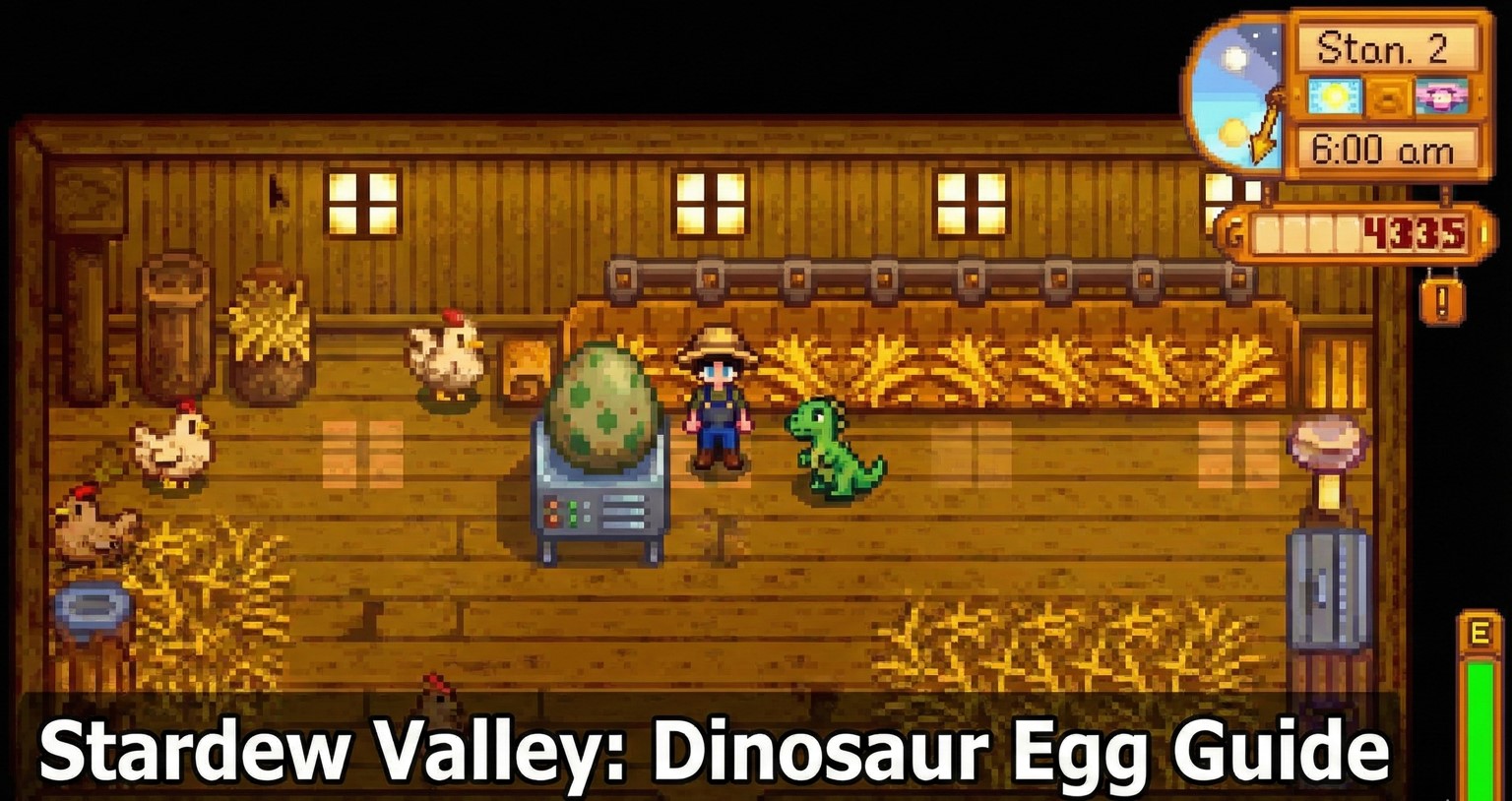
First, you need a Big Coop. Not a regular coop – it’s gotta be the upgraded version. Once you’ve got that sorted, pop an incubator inside and place your precious egg in there. Then you wait. Twelve in-game days later, you’ve got yourself a baby dinosaur.
The dinosaur acts like any other coop animal. Feed it, pet it, keep it happy. After it matures (which takes another twelve days), it’ll start laying eggs every seven days. Sometimes it skips a day or two if it’s in a bad mood, so keep that hay feeder full and don’t forget the daily pets.
Caring for Your Dinosaur
Dinosaurs aren’t picky, but they’re not low-maintenance either. They eat hay like chickens, need petting to stay happy, and appreciate a heater in winter. The happier your dinosaur, the better quality eggs it produces.
Here’s a fun fact – dinosaurs can’t produce large eggs like chickens can. Every egg they lay is the same size. But they can produce iridium-quality eggs if you keep them happy enough, which is pretty neat.
Maximizing Your Dino Profits
Once you’ve got that first dinosaur laying eggs, it’s time to think strategy. Do you want more dinosaurs? Or do you want to focus on mayonnaise production?
| Strategy | Pros | Cons |
|---|---|---|
| Multiple Dinosaurs | More eggs, faster scaling | Takes longer to see profits |
| Single Dino + Mayo | Immediate profit boost | Slower egg production |
| Museum Completion | Collection finished | One less dinosaur egg initially |
Personally? I like running 3-4 dinosaurs. That gives me enough eggs to process into mayonnaise while still having extras for gifting or selling raw when I need quick cash.
The Mayonnaise Math
Let’s break down the numbers because, honestly, they’re pretty compelling.
- Raw dinosaur egg: 350g (420g with Rancher)
- Dinosaur mayonnaise: 800g
- Processing time: 3 hours
So every egg you process into mayo nets you an extra 450 gold (or 380 if you have Rancher). That adds up fast when you’re pulling 7-8 eggs per month from multiple dinosaurs.
Common Mistakes to Avoid When Getting a Stardew Valley Dinosaur Egg
After helping countless farmers get their dino operations running, I’ve seen the same mistakes pop up over and over:
- Donating the first egg. We covered this, but it bears repeating. Incubate first. Your future self will thank you.
- Forgetting to pet them. I get it – you’ve got crops to water and ore to smelt. But those daily pets matter. An unhappy dinosaur lays eggs less frequently, and that hurts your bottom line.
- Selling eggs instead of processing. Unless you’re desperate for quick cash, turn those eggs into mayo. The profit difference is too big to ignore.
Alternative Uses for Dinosaur Eggs
Money isn’t everything, right? Sometimes there are other reasons to hang onto those eggs – the metaverse lore is one reason, while there are more practical uses.
Gifting
A few villagers actually like receiving dinosaur eggs. Leo loves them, which makes sense given his whole island-bird-connection thing. Wizard appreciates them too, probably for some arcane ritual we’re better off not knowing about.
Just don’t give them to everyone. Most villagers will look at you like you’ve handed them a rock. Because, well, from their perspective, you kind of have.
Tailoring
If you’ve unlocked the sewing machine, you can use a dinosaur egg to create a Dinosaur Shirt. It’s green, it’s quirky, and it’s a conversation starter at the saloon. Not the most practical use of an egg worth hundreds of gold, but fashion is fashion.
Quests
Occasionally, the special orders board might request a dinosaur egg. The rewards can be solid, so it’s worth checking before you process all your eggs into mayo.
Expanding Your Prehistoric Empire
Once you’ve got a reliable egg supply, you might want to scale up. Here’s how to do it efficiently:
Phase 1: Single Dinosaur
- Incubate your first egg.
- Wait for maturity (12 days).
- Collect eggs for one season.
- Decide on an expansion strategy.
Phase 2: Controlled Growth
- Incubate 2-3 more eggs.
- Keep 1-2 for selling/processing.
- Donate one to the museum if needed.
- Start mayo production.
Phase 3: Full Production
- 4-6 dinosaurs are lying regularly.
- All eggs processed to mayo.
- Consistent weekly income.
- Extra eggs for quests/gifts.
| Dinosaur Count | Weekly Eggs (avg) | Weekly Mayo Income |
|---|---|---|
| 1 | 1 | 800g |
| 2 | 2 | 1,600g |
| 4 | 4 | 3,200g |
| 6 | 6 | 4,800g |
When RNG Hates You?
Look, sometimes the game just doesn’t want to give you that infamous dinosaur egg. I’ve known farmers who went three in-game years before finding their first one. It’s frustrating, but it happens.
If you’re really struggling, focus on these high-probability methods:
- Farm Pepper Rex in Skull Cavern during lucky days.
- Check Mountain artifact spots daily.
- Fish with a treasure hunter tackle equipped.
- Visit prehistoric floors when you find them.
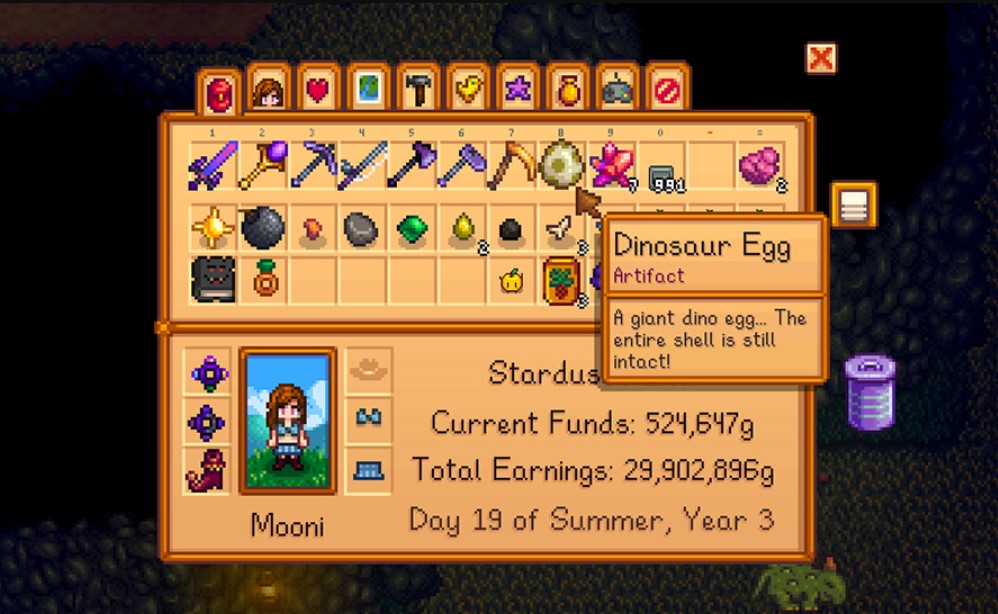
And remember – it’s not a race. The Stardew Valley dinosaur egg will drop eventually. Keep grinding, keep fishing, keep digging. One day, you’ll be casually checking your fish trap or digging up an artifact spot, and boom – there it is.
The Long Game
Here’s something most guides won’t tell you: dinosaurs are a late-game investment that pays off in the very late game. You won’t get rich quickly with Dino Mayo. But over time? The passive income from a small flock of dinosaurs adds up nicely.
Think of it as diversifying your farm portfolio. You’ve got your ancient fruit wine, your truffle pigs, your crystal fruit, and now – prehistoric poultry. Each income stream supports the others, and dinosaur mayo fills a nice niche in that ecosystem.
Plus, let’s be honest. Having dinosaurs is just plain cool. Your farm becomes that much more unique, that much more special. And isn’t that what Stardew is really about? Creating something that feels like yours?
FAQ
How rare is the Stardew Valley Dinosaur Egg?
Pretty rare. Artifact spots have less than 1% chance, fishing treasure is about 0.8%, and Pepper Rex drops sit around 10%. You’ll find one eventually, but it takes patience.
Should I sell or incubate my first Stardew Valley dinosaur egg?
Incubate it. Once your dinosaur matures, it’ll produce more eggs every week. You can sell or donate those extra eggs without losing your production source.
How long does it take for a dinosaur to lay eggs?
After maturity, dinosaurs lay eggs every 7 days on average. Happiness affects this slightly, so keep them well-fed and petted.
Can I get dinosaur eggs from my chickens?
Nope. Only actual dinosaurs lay dinosaur eggs. You need to hatch the first one from a found egg, then build your flock from there.
What’s dinosaur mayonnaise worth?
800 gold per jar, regardless of egg quality. That’s significantly more than the 350-420 gold you’d get from selling the raw egg.
Do I need a special coop for dinosaurs?
Yes, you need at least a Big Coop with an incubator. Regular coops won’t cut it for hatching the egg.
How many dinosaurs should I keep?
Most farmers run 3-5 dinosaurs for steady mayo production without overwhelming their coop space. But you can keep as many or as few as you want based on your farm goals.
Wrapping This Up
Getting your first Stardew Valley Dinosaur Egg feels like a genuine achievement because, well, it is one. The search can be long, the RNG can be cruel, but that moment when you finally spot that distinctive mottled egg in your inventory? Worth every frustrating artifact spot and every dangerous Skull Cavern run.
The ObserverGames team recommends – start with one, grow your flock slowly, and before you know it, you’ll have a steady stream of prehistoric profits flowing into your farm account. Just remember to save one for Gunther eventually. The man’s been patient long enough.